 导航
导航
Hotline: 0510-88783691
Hotline: 0510-88782152
Hotline: 0510-88782152
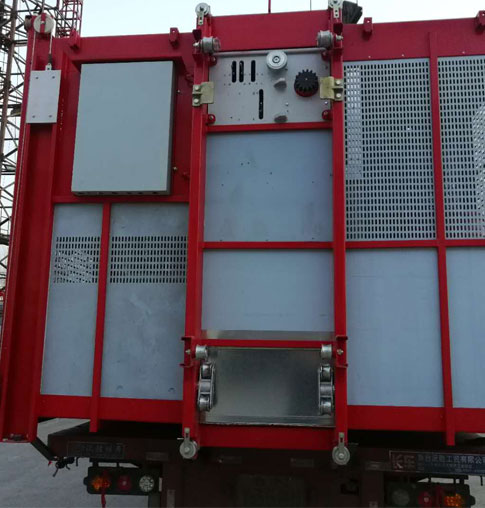
Wide range
This type of elevator has few requirements for the type and characteristics of materials. It can not only lift general powdery and small granular materials, but also materials with high abrasiveness. It has good sealing performance and causes less environmental pollution.
Good reliability
Advanced design principles and processing methods ensure the reliability of the entire machine's operation, with a mean time between failures exceeding 20,000 hours. It has a high lifting height and the hoist operates smoothly, thus achieving a relatively high lifting height.
Long service life
The feeding of the elevator adopts the inflow type, without the need to dig materials with buckets. There is rarely any squeezing or collision between materials. This machine is designed to ensure that there is little spillage of materials during feeding and unloading, reducing mechanical wear.
The conveying working principle of the material elevator is as follows: The hopper scoops up the materials from the storage below, lifts them to the top along the conveyor belt or chain, and then flips them downward after passing around the top wheel. The material elevator then pours the materials into the receiving trough. The drive belt of a belt-driven material elevator is generally made of rubber and is installed on the lower or upper drive rollers and the upper and lower redirecting rollers. Chain-driven material elevators are generally equipped with two parallel transmission chains. There is a pair of transmission sprockets at the top or bottom and a pair of redirecting sprockets at the bottom or top. Material elevators are generally equipped with casings to prevent dust from flying around in the bucket elevator.
Safe installation
(1) The operator of the hoist should operate the hoist exclusively, hold a valid certificate, be familiar with the technical performance of the equipment, be proficient in the operation procedures of the hoist, and wear protective gear during operation.
(2) Before starting the machine, the operator must check that the frame structure, power lines, equipment zero connection, ropes, ground anchors, parking devices, protective doors, etc. meet the requirements before starting the machine.
(3) The material hoist must not be overloaded.
(4) After the hoist cage is lifted, no one is allowed to stand under it and no one is permitted to ride on the hoist cage to get on or off. After loading materials, the loading personnel should stay away from the material elevator. Other types of personnel are not allowed to stick their heads out of the shaft.
(5) When unloading materials, the operator must wait until the hoist cage has come to a complete stop before opening the protective door to unload the materials from the hoist cage. After unloading, the hoist operator can lower the hoist cage only after the operator has closed the protective door.
(6) There is a unified command signal for the lifting and lowering of the hoist cage, which should be fully equipped by the construction site and explained to the operators (operators, signalmen, and operators). If the signal is unclear, the operator may refuse to operate.